A STORIED BRAND STUDIO GUIDE
Your Storyselling Fixes
You found the gap. Here's what to do about it.
Before we begin
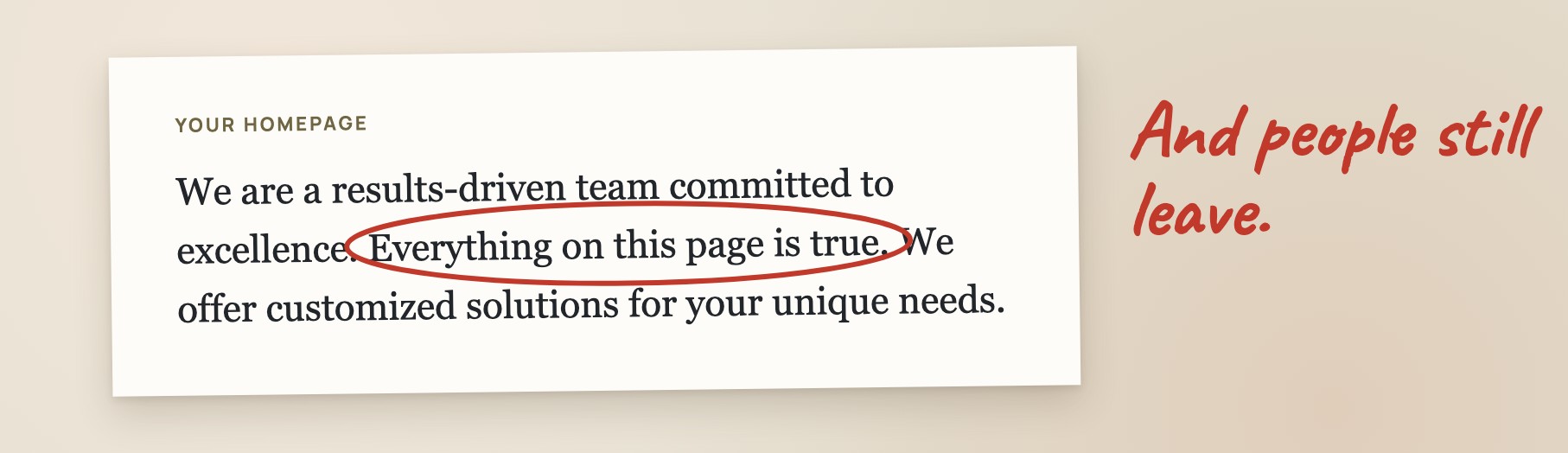
You've rewritten it more times than anyone knows. The homepage, the bio, the part of the sales page where you're supposed to explain why you do this. Everything on it is true, and people still read it and leave.
A few minutes ago, you told me where it stands. Please don't take the number personally. Very smart people miss these gaps all the time, because they're standing inside their own story.
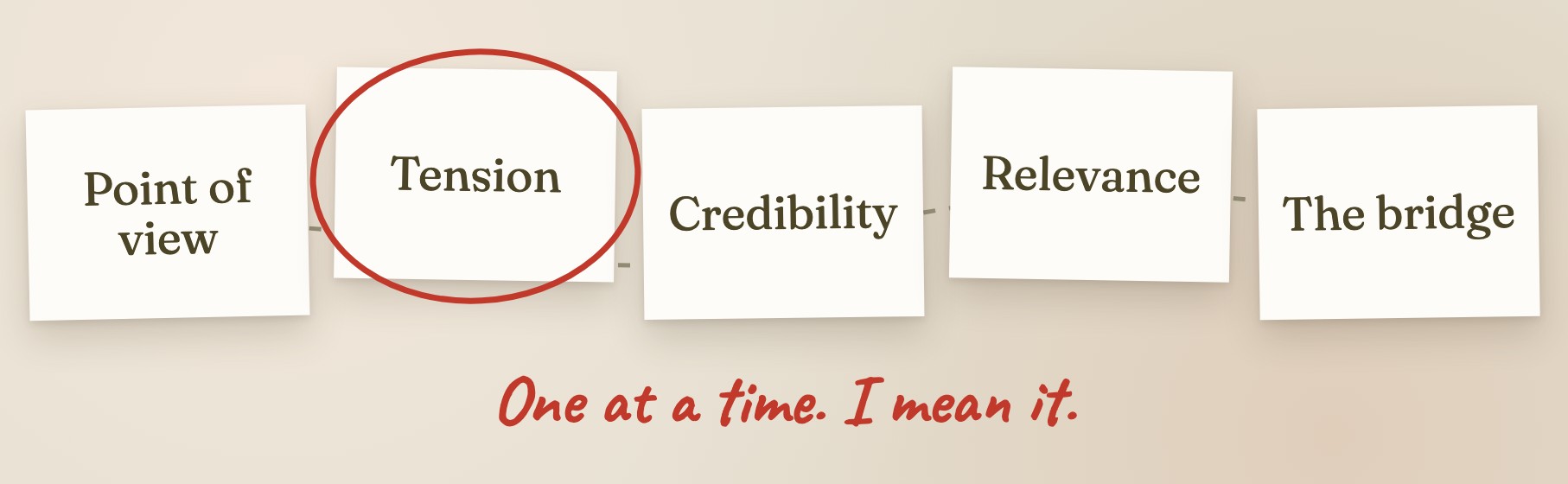
Start with the gap I marked, and leave the other four alone for now. One good change will teach you more than five half-finished ones.

What your score means
Nobody's grading you. It's only telling us where to look first.
YOUR SCORE | WHERE YOUR STORY STANDS | WHERE TO START |
|---|---|---|
15 to 39 | Still untold. You've got the material, and very little of it has reached anyone yet. | Find the stories first. Then start on your biggest gap. |
40 to 64 | In draft. You have the pieces, and a gap or two is keeping people from seeing them. | The gap I marked. It's where you'll feel the difference first. |
65 to 75 | Nearly storied. Your story is working, and one gap is left. | Close that gap, and then get a second reader. |
IF YOUR FIVE SCORES CAME OUT EVEN
That doesn't happen often, and it usually means you're being kind to yourself. Pick the statement that made you hesitate longest, and start there.
IF YOU WORK WITH A TEAM
Ask three people to take it separately, and compare your results. If your founder and your sales lead find different gaps, that's a conversation worth having, and I'd love to be part of it. Write to me at hello@storiedbrand.studio.
COME BACK IN SIX MONTHS
Take it again, and see whether your number has moved. It takes about four minutes, and I'd love to hear what changed.
Who you are: point of view
Your audience can tell what you do. They can't tell what you believe.
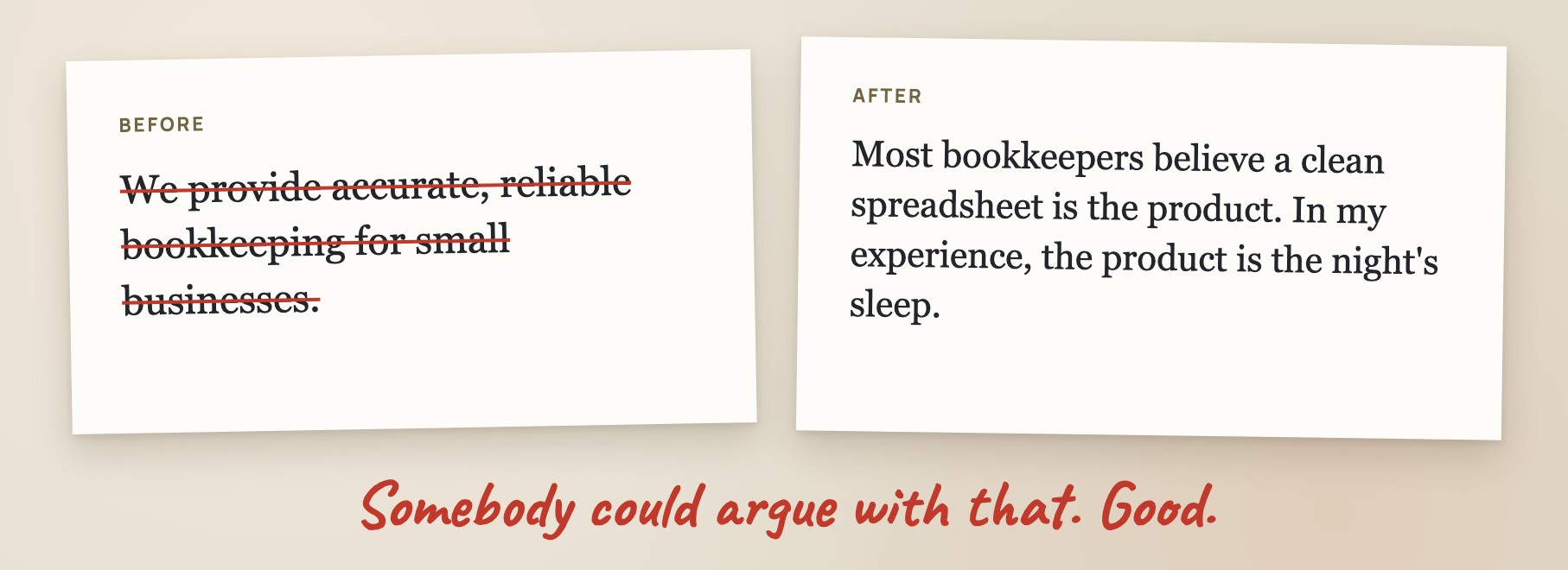
Most brand stories tell people what you do, and far fewer tell them what you believe. Without a clear point of view, your story sounds like everyone else's in your field, and people have no reason to choose you over a cheaper or better-known option.
A point of view is a belief you can explain that a reasonable person in your field might disagree with. It doesn't need to be loud, but it does need to be yours.
WHAT I NOTICE FIRST
I can often tell what's missing in one line, and it's usually the first one. When a story opens with "I've always been passionate about helping people," I know there's no point of view coming. Passion is the default claim, and it tells a customer nothing about what you believe that others in your field don't.
Your first step
Write down one piece of common advice in your industry that you disagree with, and explain why in two sentences. That disagreement is the start of your point of view.
Why you do it: tension
You went from the beginning straight to the success, and you skipped the best part.
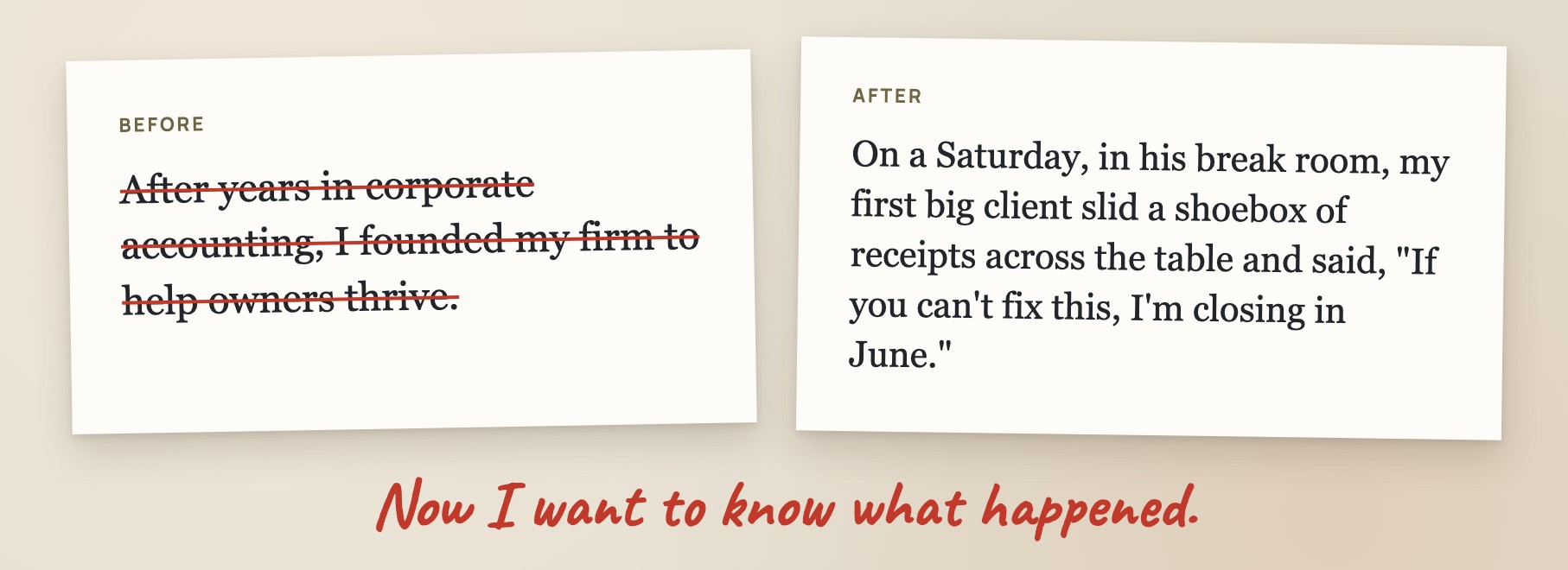
The struggle is what keeps people reading, and it's also what makes your results believable. A story with nothing at stake reads like a résumé.
The tension doesn't have to be dramatic. It can be a decision you weren't sure about, a stretch when the work wasn't working, or a moment you nearly chose differently. Customers need to see that things could have gone another way.
WHAT PEOPLE TELL ME
This is the gap I see most, by a wide margin. When I ask for the hard part of someone's story, the most common answer is "It wasn't that bad." Close behind is "I don't want this to be a sob story," and I agree with that. A brand story doesn't need tragedy. It needs a moment when the outcome was uncertain. If you've just thought, "Well, there was one year...," that's usually where your signature story starts.
Your first step
List three moments when you weren't sure your work would succeed. At least one of them belongs in your signature story.
Your proof: credibility
You've told people you're good at this. Now show them.
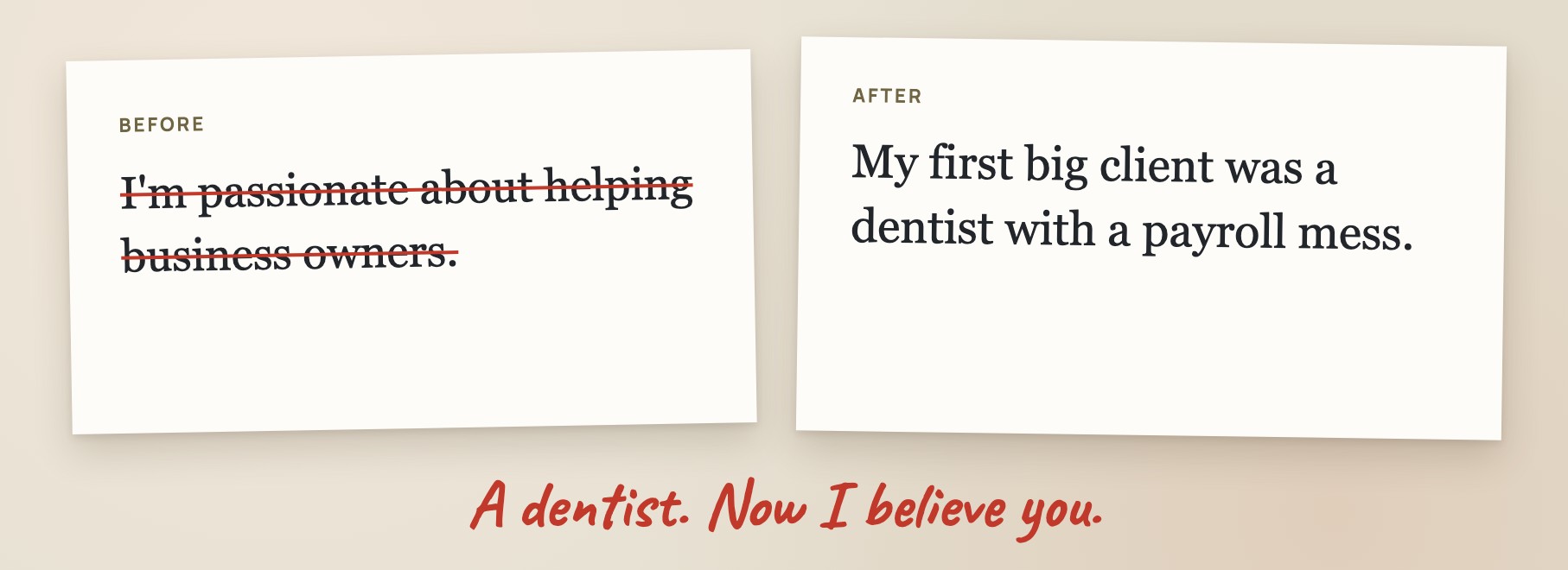
Customers have seen "passionate," "experienced," and "results-driven" so many times that they slide right past them. General claims like these ask people to take your word for it.
Specific details work the other way. A name, a number, or a place is hard to invent and easy to remember. Your credentials should support the story, and they can't replace it.
IF THIS IS YOUR GAP
You're in unusual company. This is the gap I see least, because almost everyone I work with has more credentials than they need.
Your first step
Find one adjective on your homepage, such as "passionate" or "experienced," and replace it with a number, a name, or a place that proves the same point.
Why they should care: relevance
It's a lovely story. Can they find themselves in it?
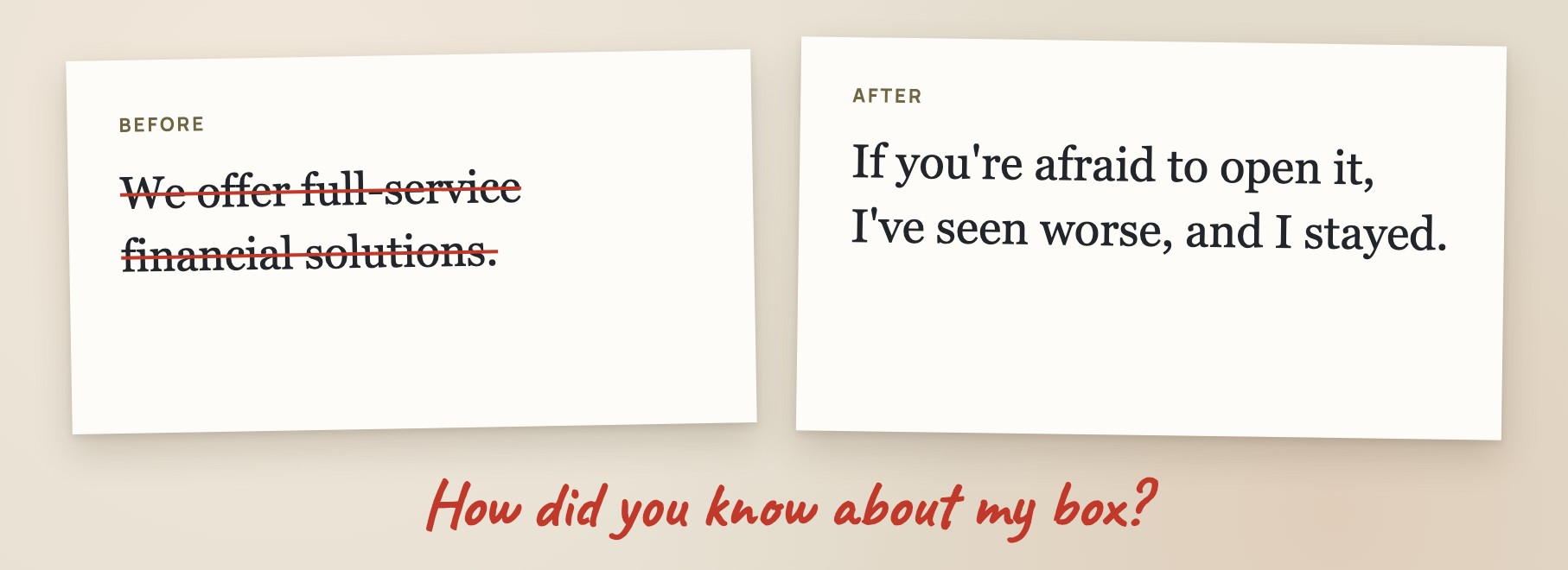
Your brand story is about you, and you're writing it for your customer. People act when they recognize themselves in a story. If they can't see their own situation in yours, they'll admire it and move on.
The fastest way to close this gap is to borrow your clients' language. The way a client describes a problem before working with you is rarely the way you'd describe it as an expert, and their version is the one your future clients are searching for.
WHAT GETS LEFT OFF
A founder of a small skincare company once mentioned, almost as an aside, that she had started making her products in her kitchen after her daughter's eczema didn't respond to anything on the market. Her website talked about clean ingredients and small-batch production, the same claims every brand in her category makes. The reason the company existed appeared nowhere. She didn't want to "use" her daughter's story. We talked it through with her daughter, who was a teenager by then and thought it was a good idea, and they decided to tell it together.
Your first step
Write down the exact words a recent client used to describe their problem before they worked with you. Use their language in the next version of your story.
The next step: the bridge to what you sell
They liked your story. Do they know why they should hire you?
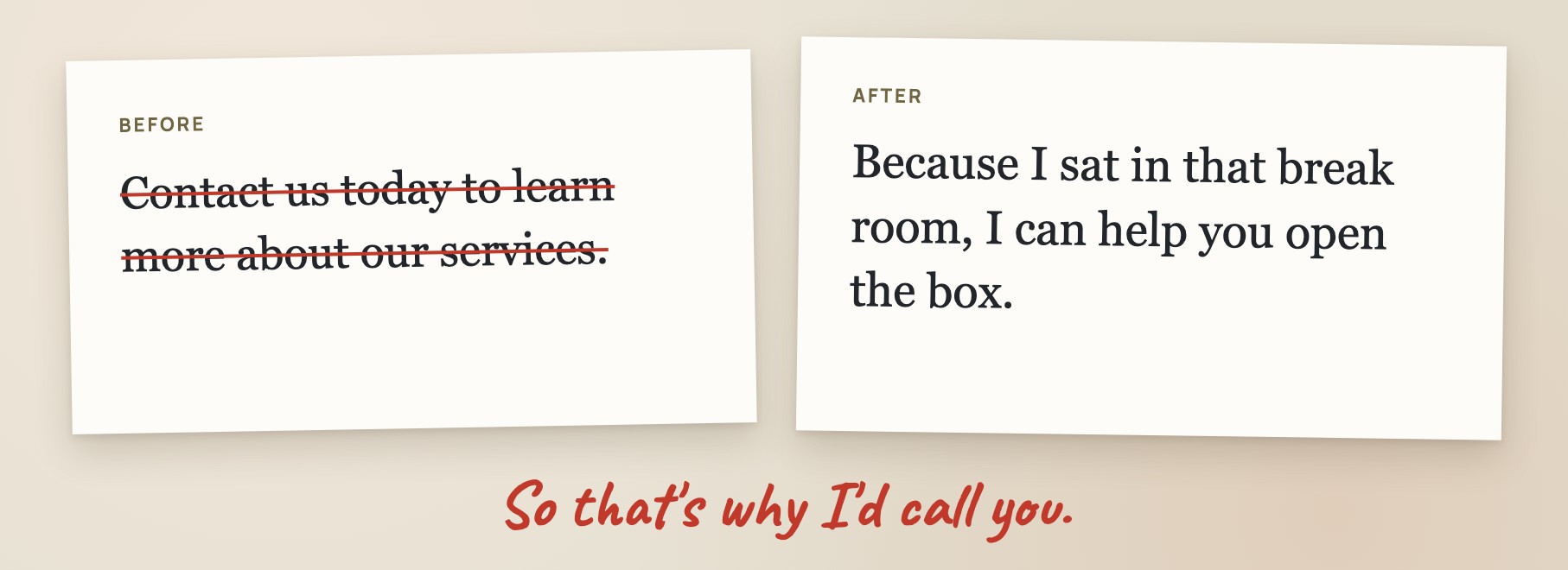
People can enjoy your story without ever connecting it to what you offer. A story that sells shows why your experience makes you the right person for this customer's particular problem.
The bridge usually runs through your point of view. What you lived through taught you something, and that's what you're selling.
WHERE THE STORY STOPS
This one is a close second to tension, especially on personal brand sites. The story is moving and well told, and then it simply ends, with no line connecting what happened to you to what the customer can buy. Watch for a closing line like "And the rest is history." The customer gets a satisfying ending and no reason to take the next step.
Your first step
Finish this sentence: "Because I went through ___, the people I work with get ___." If you can't finish it in one line, your story and your offer haven't met yet.
Your sentence
Because I went through ___, the people I work with get ___.
Everything you've written on these pages leads here. Gather it in one place, and then finish the sentence at the bottom. Read it out loud when you're done, because you'll hear what's off much faster than you'll see it.
Now finish it
WHERE IT GOES FIRST
Your homepage, your bio, and the way you answer "What do you do?" One sentence can go a long way once it's true.
If you scored 65 or more
Your story has all five, and it still isn't doing what you hoped. Usually, that's placement or voice.
A story can have a clear point of view, real tension, credibility, relevance, and a bridge to the offer, and still fail because it's buried in the fourth paragraph of a page no one reaches. Sometimes it's in the right place but sounds like a template. Every element is technically there, and nothing in the language belongs to you.
Customers can sense when a story has been assembled instead of told. The fix is rarely to add something. It's usually to move the story where people will see it, or to put your own words back in.
When you want a second reader
You wrote it, so you can't read it the way a buyer will. In Story Architecture, I read your page the way your next customer will, and then I show you where they lean in, where they wander off, and what to change first.
Now you know where it's losing people.
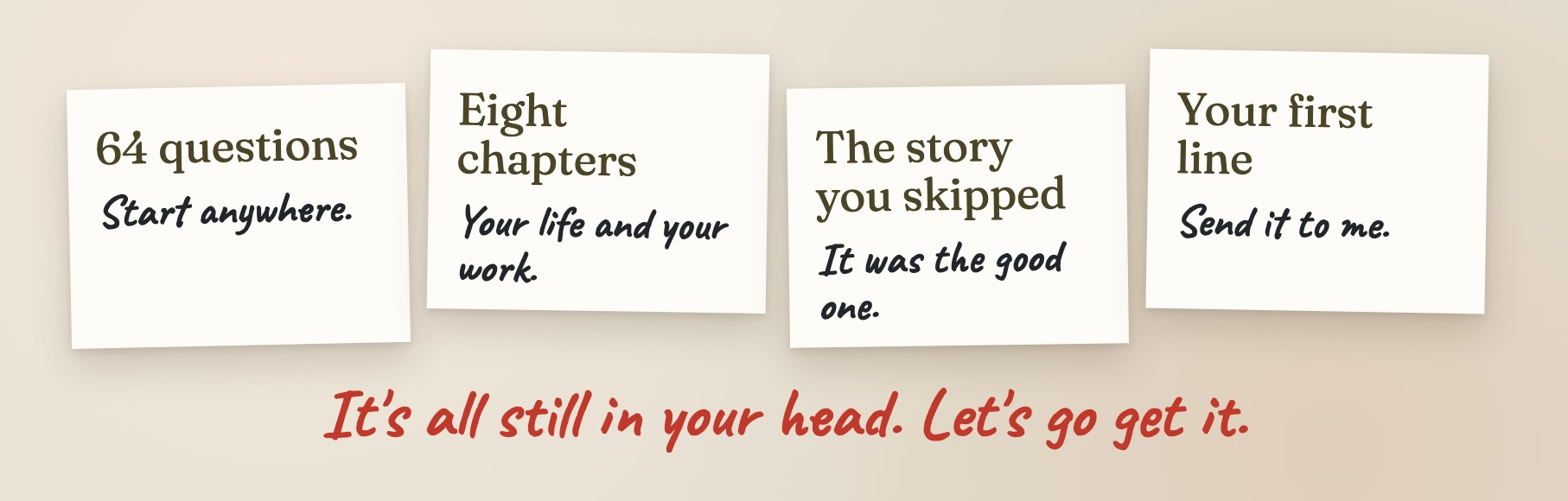
The next step is finding the stories that close the gap.
Story Excavation is my interview process, adapted so you can work through it on your own. Sixty-four questions help you find the moments that build trust, create desire, and answer the objections that keep people from buying.
PREFER TO TALK IT THROUGH?
Book a free consult, and we'll look at your story together.
READY TO GO FURTHER?
The Storied Brand Method shows you how to shape your story and sell with it across your brand.
WANT COMPANY?
Your Brand Story comes out monthly on Substack. I'd love to have you there.
Send me your first line. Copy the opening sentence of your homepage into an email to hello@storiedbrand.studio. I read every one myself, and I'll tell you what I'd do with it.